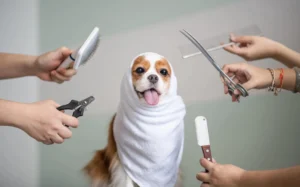

Grooming is important for your dog health, but keeping them calm can be challenging. Lots of dogs are great, but they can get a bit anxious around new noises, touches, and places.
Making dogs feel safe during grooming is important. It helps to earn their trust, providing them comfort and creating positive associations. If you follow some tips regarding keeping them calm, you’ll be able to make a positive environment for them.
1. Introduce Grooming Gradually
It takes time for dogs to get used to grooming; they will take time to understand the process. Gently brush them, let them observe the tools and softly mimic the motion without applying any pressure.
Keep the first few sessions short and handle your pets with care. You can gradually increase the grooming sessions once they get used to it.
You should do grooming, depending on the time they can tolerate it. It is better to give them little breaks in between to make them relax. Spending time together builds confidence in them, and it is a way to make them familiar with grooming.
2. Reward Calm Behavior
It is also one of the most successful methods of promoting calm behavior during grooming. Have some treats close by and try to reward your dog with one whenever he stays still or lets you gently touch him. This will help them to develop a positive learning association with grooming.
Talk in soothing voice in front of them, also give them soft praises. You can increase the gap between rewards as they get used to the process.
Don’t scold or shout at your dog; it will increase his anxiety. A patient and positive approach builds trust and also gives him confidence.
3. Take Breaks When Needed
Recognizing when your pet gets tired helps in trust building. You should take a break if you observe them feeling uncomfortable. The following symptoms they’ll show:
- Pulling away
- Trembling
- Growling
- Whining
Give them a break to rest. Get some water and let them stretch themselves for a few seconds. Making the process uncomfortable will make your dog really anxious, and grooming will be even harder in the future!
Short, frequent sessions are best, particularly when training inexperienced or nervous dogs. A “little and often” approach means they can gradually build confidence and remain calm during the grooming process.
4. Use Safe Restraints (If Needed)
In some cases, applying light restraint can help keep your dog steady and reduce movement during grooming. The aim is safety and comfort, not stress or fear.
- If necessary, help support him with a no-sit haunch holder or grooming loop.
- Introduce restraint slowly, with the use of treats and quiet words of praise.
- Make certain that the restraint feels supportive, not restrictive — it should make the dog feel secure rather than confined.
- Restraint should never be used as punishment; doing so may lead to anxiety or trust breakdown.
- Keep these sessions short and quiet, talking to your dog in a gentle voice the whole time to keep him reassured.
When applied properly, restraint can help make grooming a safer experience for you and the dog.
5. Keep Yourself Confident
Your dog senses your emotions. Do not panic or rush, and they won’t either. Here’s how you can do it:
- Inhale and exhale deeply — your vibration creates the mood.
- Talk in a calm and soothing voice while you groom.
- Don’t be too quick; take your time and stay positive.
- Think of grooming as a bonding moment, not a task to finish.
6. Get Professional Help
If you still can’t control your pet during grooming after trying out different methods, it’s better to contact the professionals. They’re experienced and will treat your dog with care and proven methods. They may also recommend desensitization or calming strategies for your pet. It’s beneficial to take professional help early, as it helps not to make grooming a stressful experience for you and your pets.
Conclusion
You won’t make grooming a success if you have an authoritative attitude toward your dog. It’s about building trust with a little patience and gentle treatment. Even the most anxious pup can learn to relax and have fun. Over time, grooming becomes something more than a task — a bit of care, comfort and connection between you and your furry friend.