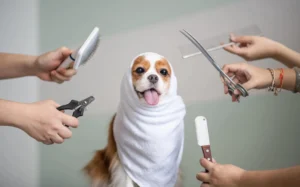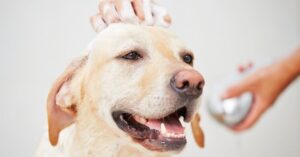
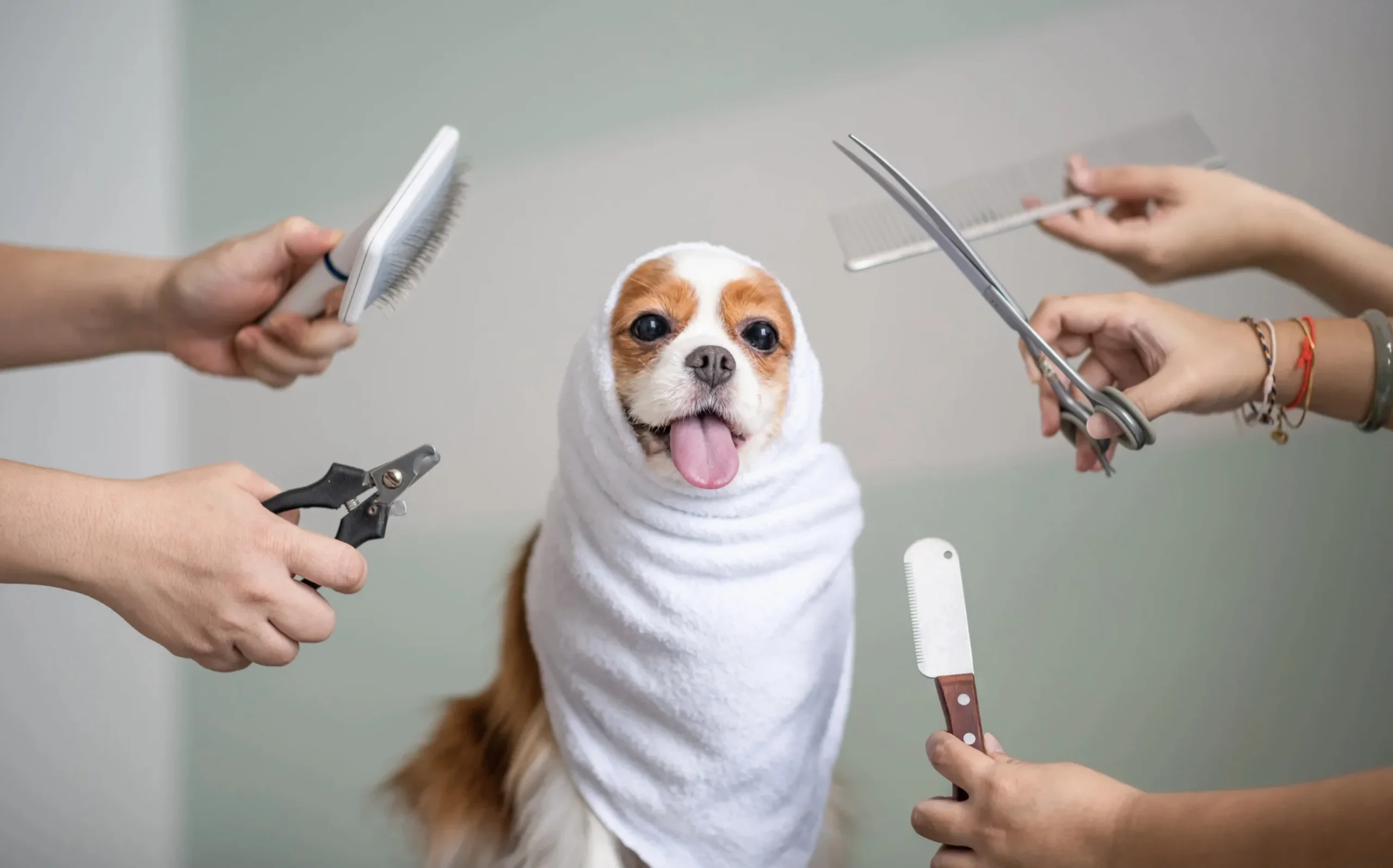
When grooming a dog, you should usually wash the dog before giving the final haircut. Bathing first removes dirt, loose hair, oil, and debris from the coat, making the hair cleaner and easier to brush, dry, and trim. However, professional groomers may do a small amount of trimming before the bath if the coat is extremely long, tangled, or matted.
The general grooming order is:
Brush → Trim heavily matted or excessively long hair if needed → Bathe → Dry completely → Brush again → Cut and shape the coat → Trim sensitive areas → Finish with nails, ears, and other grooming tasks.
The exact process can vary depending on the dog’s breed, coat type, hair condition, and the type of haircut you want. Understanding the correct order can make grooming safer, easier, and more comfortable for your dog.
Why Do You Usually Wash a Dog Before Cutting?
It may seem logical to cut a dog’s hair first and then wash away the loose hair. However, professional dog grooming usually works better when the coat is clean before the final haircut.
Dogs naturally collect dirt, dust, pollen, oils, and other debris in their coats. If you try to run grooming clippers through a dirty coat, the blades can have a harder time moving through the hair. Dirt can also make the coat feel rough and may cause the clippers to pull at the hair.
A clean coat is generally easier to:
- Brush
- Dry
- Detangle
- Clip
- Shape
- Evenly trim
Bathing also helps remove loose hair and buildup from the skin and coat. Once the dog is completely dry, you can brush the coat and see its natural length and condition more clearly.
For these reasons, bathing before the final haircut is generally the preferred approach.
Should You Ever Cut a Dog’s Hair Before the Bath?
Yes. There are situations where a small amount of trimming before bathing makes sense.
For example, imagine a dog with a very long coat that is dragging through dirt or heavily matted around certain areas. Washing the coat without addressing those problems can make grooming more difficult.
A groomer may carefully remove severely matted or excessively dirty sections before the bath. This is sometimes called a preliminary trim.
However, this does not mean you should give the dog a complete haircut before bathing.
The main haircut is usually performed after the coat has been washed, dried, brushed, and properly prepared.
When Pre-Bath Trimming May Help
Pre-bath trimming can be useful when:
- The coat contains severe mats.
- The hair is heavily soiled.
- The coat is extremely long.
- The dog has feces or other material stuck in the hair.
- The coat is making bathing difficult.
- Certain areas need to be shortened before cleaning.
If the dog has severe matting close to the skin, it is often safer to have a professional groomer handle it. Cutting through mats can accidentally injure the skin because the skin may be pulled into the tangled hair.
The Proper Dog Grooming Order
A good grooming routine involves more than simply washing and cutting. Following a logical order can help make the process safer and more comfortable for your dog.
1. Give Your Dog a Quick Check
Before you start grooming, look over your dog’s coat and skin.
Check for:
- Mats and tangles
- Cuts or irritated skin
- Redness
- Fleas or ticks
- Lumps or unusual bumps
- Dirt around sensitive areas
- Foreign objects stuck in the coat
If you notice something unusual, avoid aggressively brushing or cutting the area.
You should also consider your dog’s behavior. If your dog is extremely nervous, aggressive, or uncomfortable with grooming, professional assistance may be safer.
2. Brush the Coat
Brushing is one of the most important steps in dog grooming.
Ideally, brush the coat before the bath to remove loose hair, surface dirt, and manageable tangles. Brushing before bathing can also help prevent small tangles from becoming tighter during washing.
Different dogs require different brushes.
For example:
- Short-haired dogs may need a rubber grooming brush or bristle brush.
- Long-haired dogs may benefit from a slicker brush and comb.
- Curly-coated dogs often require careful brushing and combing to prevent mats.
- Double-coated dogs may need tools designed to remove loose undercoat.
Always brush gently. Pulling aggressively on tangled hair can hurt your dog and may make them afraid of future grooming sessions.
3. Remove Severe Mats Carefully
If you find serious mats, don’t immediately start cutting them with scissors.
Mats can form close to the skin, making it difficult to tell where the hair ends and the skin begins. Cutting blindly can result in an accidental cut.
A professional groomer has the tools and experience to deal with severe matting more safely.
Never use scissors directly against the skin when you cannot clearly see the space between the blade and the skin.
4. Bathe Your Dog
Once the coat has been brushed and any necessary preliminary trimming has been completed, you can bathe your dog.
Use a dog-specific shampoo rather than human shampoo. Dogs have different skin needs, and products designed for people may not be appropriate for a dog’s skin.
Before bathing, make sure the water is comfortably warm rather than hot.
Wet the coat thoroughly, then apply shampoo and gently work it through the coat.
Pay attention to areas that commonly collect dirt, including:
- Paws
- Legs
- Belly
- Tail area
- Chest
- Neck
- Under the body
Be careful around the eyes and ears.
After shampooing, rinse thoroughly. Shampoo left in the coat can cause skin irritation.
If your dog needs conditioner, use a product designed specifically for dogs and follow its directions.
5. Dry the Coat Completely
After the bath, drying is extremely important.
Do not immediately start cutting a dog’s coat while it is soaking wet.
Use towels to remove excess water first. Depending on the dog and coat type, you may then use a pet-safe dryer.
Dogs can have different reactions to grooming dryers, so introduce the sound and airflow gradually. Avoid extremely hot air and keep the dryer moving rather than concentrating heat on one small area.
The coat should be completely dry before the final haircut.
Drying also helps straighten and fluff the hair, which makes it easier to see the true shape and length of the coat.
6. Brush the Coat Again
After the dog is dry, brush the coat again.
This second brushing is important because bathing and drying can reveal tangles that were difficult to see beforehand.
Use a comb to check whether you can move through the coat without resistance.
If the comb gets stuck, there may still be a tangle or mat that needs attention.
For curly or long coats, proper brushing and drying can make a major difference in the final appearance of the haircut.
7. Give the Final Haircut
Now you can move on to the main haircut.
This is where you trim the coat to the desired length and shape.
The appropriate haircut depends heavily on the dog’s breed and coat.
For example, a dog with a curly coat may have different grooming requirements than a dog with a straight, silky coat. Some breeds also have traditional grooming styles that are designed around their coat structure.
If you’re grooming your dog at home, avoid trying a complicated breed-specific haircut without learning the proper technique first.
A simple, even trim may be safer than attempting a complicated style.
8. Trim Around Sensitive Areas Carefully
Certain areas require extra care.
These can include:
- Around the eyes
- Around the ears
- Between the paw pads
- Around the sanitary area
- Around the tail
Use appropriate grooming equipment and keep your dog as still and comfortable as possible.
Never rush these areas.
If your dog suddenly moves while scissors or clippers are near the skin, an injury can occur.
If you are inexperienced, consider leaving delicate areas to a professional groomer.
9. Trim the Nails
Nail trimming can be performed during the grooming session.
Long nails can become uncomfortable and may affect how a dog stands or walks.
However, dog nails contain a sensitive area called the quick. Cutting into it can cause pain and bleeding.
If you aren’t confident trimming your dog’s nails, a groomer or veterinarian can help.
10. Clean the Ears Carefully
Ear care is another part of grooming.
Not every dog needs the same level of ear cleaning. Some dogs naturally produce more wax or have ear shapes that make them more prone to moisture and debris.
Use a veterinarian-recommended or dog-specific ear-cleaning product when appropriate.
Avoid inserting objects deep into the ear canal.
If you notice a strong odor, excessive discharge, swelling, redness, or signs that your dog is uncomfortable, contact a veterinarian rather than trying to treat the problem through routine grooming.
Why Cutting a Dirty Coat Can Be Difficult
Cutting a dirty coat can create several problems.
Dirt and oil can make hair harder to separate and may cause clippers to move less smoothly. A dirty coat can also hide the true condition of the skin.
Additionally, cutting a dirty coat can cause grooming tools to become dirty or clogged more quickly.
This is one reason professional groomers typically prefer working with a clean, properly dried coat when performing the final haircut.
Why You Shouldn’t Cut a Wet Coat
A wet coat can look different from a dry coat.
Wet hair tends to clump together and may appear shorter or longer depending on the coat type. Once the coat dries, it can fluff up and change the appearance of the haircut.
Cutting a wet coat can therefore make it harder to achieve an even finish.
There are specialized grooming techniques and equipment used by professionals for certain coat types, but for most home grooming situations, wash, dry, brush, and then trim is a simple rule to follow.
What About Dogs With Double Coats?
Double-coated dogs require special consideration.
Breeds such as Golden Retrievers, German Shepherds, Huskies, and other double-coated dogs have an outer coat and an undercoat.
Routine grooming usually focuses on brushing, removing loose undercoat, bathing, drying, and maintaining the coat rather than shaving it.
You should not automatically shave a double-coated dog simply because the weather is warm.
If you are unsure about the correct grooming approach for your dog’s coat, talk to a professional groomer or veterinarian.
How Often Should You Bathe a Dog?
There is no single bathing schedule that works for every dog.
Bathing frequency depends on factors such as:
- Coat type
- Skin condition
- Activity level
- Lifestyle
- Outdoor exposure
- Medical needs
- Whether the dog gets dirty frequently
Some dogs may need regular professional grooming, while others require only occasional baths.
Over-bathing can sometimes contribute to dry or irritated skin, particularly when inappropriate products are used.
Your veterinarian can help determine an appropriate bathing routine if your dog has specific skin concerns.
How Often Should a Dog Get a Haircut?
Haircut frequency also depends on the breed and coat.
Dogs with continuously growing or curly coats may need regular haircuts to keep the coat manageable. Other dogs may not need their body hair cut at all.
Instead, they may benefit from regular brushing, bathing, nail care, and occasional trimming of specific areas.
A dog’s grooming schedule should be based on the needs of its individual coat rather than a one-size-fits-all schedule.
Common Dog Grooming Mistakes to Avoid
Even simple grooming can go wrong if you rush.
Here are some common mistakes to avoid.
Cutting Before Brushing
Trying to cut through tangled hair can produce an uneven result and may pull on your dog’s skin.
Bathing a Severely Matted Coat
Water can tighten certain mats and make them more difficult to remove.
Using Human Shampoo
Human products are not necessarily designed for a dog’s skin.
Cutting Too Close to the Skin
This can increase the risk of cuts, irritation, or clipper burn.
Using Dull Clippers
Dull blades can pull hair instead of cutting smoothly.
Ignoring Your Dog’s Stress
If your dog is showing strong signs of fear or stress, forcing the grooming session can create a negative association with grooming.
Forgetting to Dry Completely
A damp coat can make brushing and trimming more difficult and can leave the finished haircut uneven.
Should You Groom Your Dog at Home or Visit a Professional?
Simple grooming tasks can often be performed at home if you have the right equipment and your dog is comfortable with the process.
Home grooming may include:
- Brushing
- Basic bathing
- Nail maintenance
- Basic coat care
- Routine ear cleaning when appropriate
However, professional grooming may be a better option when your dog has:
- Severe mats
- A complicated coat
- A breed-specific haircut
- Strong grooming anxiety
- Difficult behavior
- Skin problems
- A coat that requires specialized equipment
Professional groomers are trained to work with different coat types and can often identify grooming problems that inexperienced owners may overlook.
Final Answer: Wash or Cut First?
So, when grooming a dog, should you wash or cut first?
For most dogs, the best general approach is to brush first, bathe the dog, dry the coat completely, brush again, and then perform the final haircut.
A small amount of trimming may be necessary before the bath if the dog has severe mats, extremely dirty hair, or excessive coat length that makes bathing difficult. However, the main haircut is generally easier and more accurate when performed on a clean, completely dry, properly brushed coat.
The most important thing is to groom according to your dog’s coat type, skin condition, breed, and comfort level. If you’re unsure about using clippers or scissors, especially around sensitive areas, a professional groomer can help keep the process safe.
A good grooming routine isn’t just about making your dog look clean and neat. Regular grooming can also help you notice changes in the skin, coat, paws, ears, and nails before they become bigger concerns.